Delivering Aid Amid Conflict: Field Volunteers’ Story from Ngaphe Township
Delivering Aid Amid Conflict: Field Volunteers’ Story from Ngaphe Township
Escalating armed conflict in Ngaphe Township since early 2024 has caused widespread displacement and humanitarian distress, particularly among Chin ethnic communities. Most households in the area rely heavily on agriculture for their daily survival. However, intensified clashes between the Arakan Army (AA) and State Administration Council (SAC) forces around the Nat Yay Kan hill base and surrounding areas severely disrupted access to farmland and local markets, causing many families to lose their primary source of food and income.
Repeated airstrikes, drone attacks, and armed clashes forced residents from 22 villages to flee their homes, leaving 598 households and more than 4,200 individuals without stable access to livelihoods, farmland, education, and basic services.
In response to the deteriorating situation, The Space conducted a Rapid Needs Assessment (RNA) in September 2025 across 22 villages to identify urgent humanitarian needs. The assessment highlighted critical shortages of food, essential household items, and protection support, reinforcing the need for timely emergency assistance.
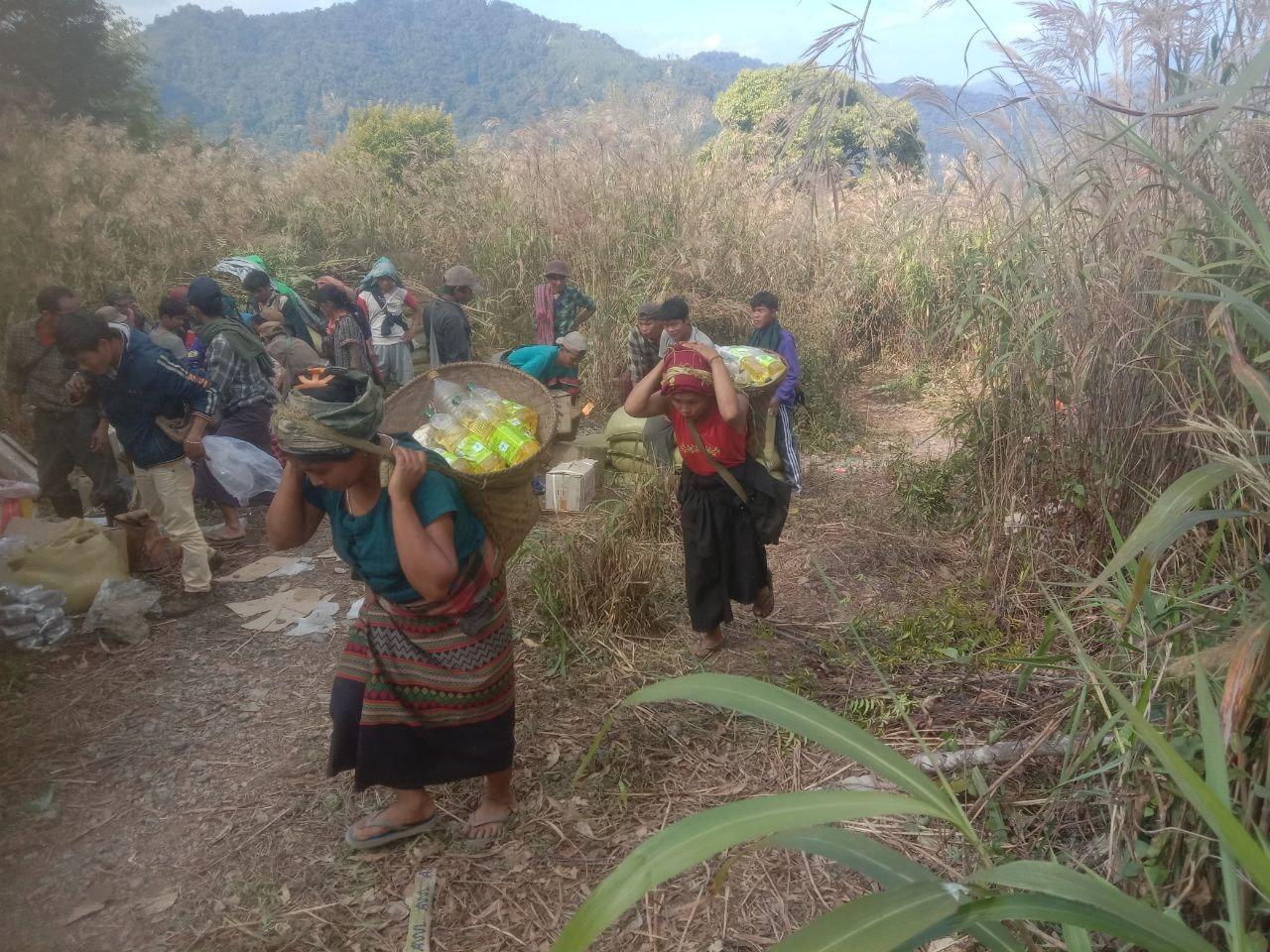
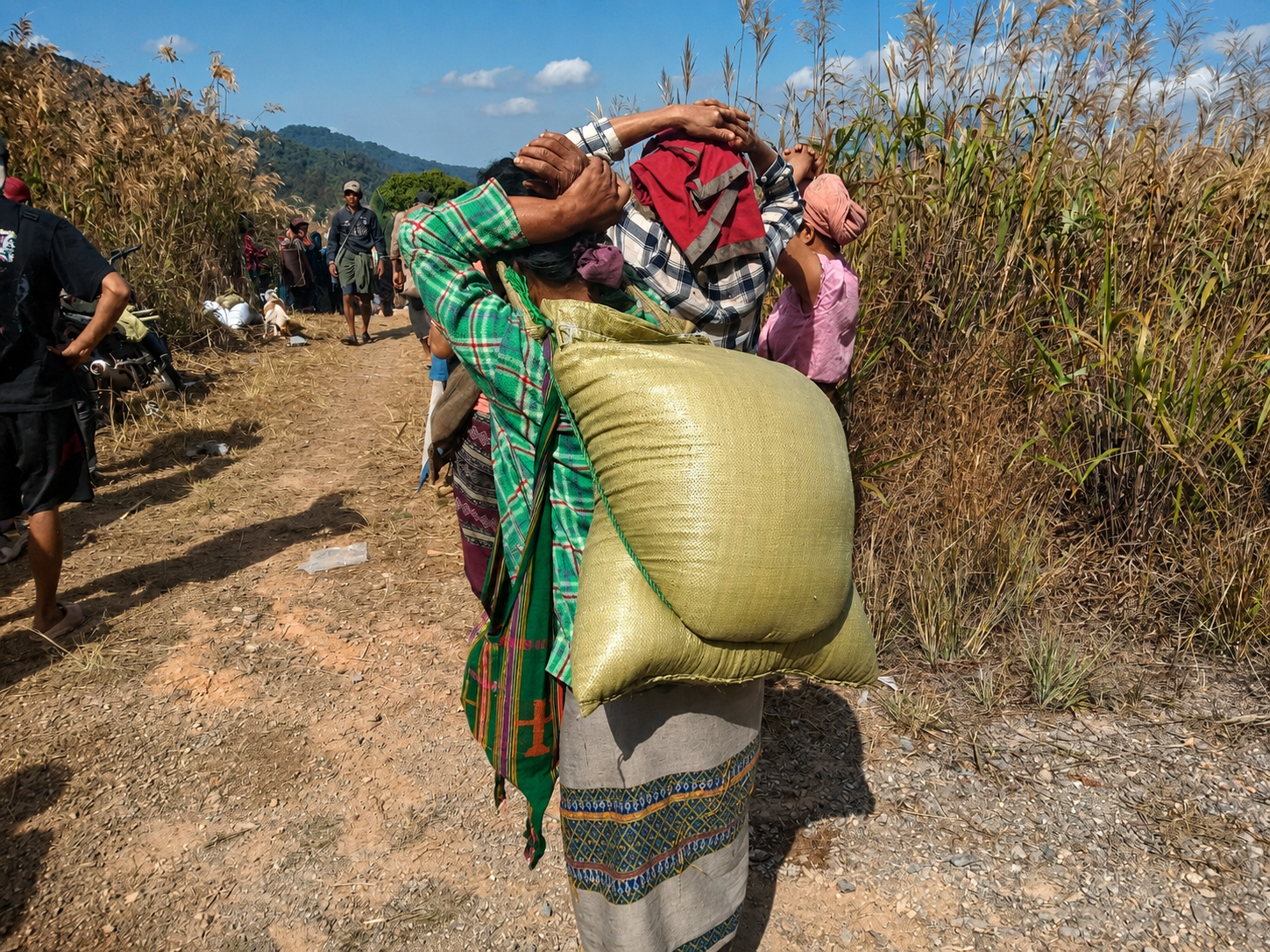
Delivering aid under these conditions required significant coordination, adaptability, and trust within local communities. Despite ongoing insecurity, transportation difficulties, and communication challenges, field volunteers played a vital role in ensuring that food assistance reached vulnerable households. Working closely with local zonal committees, volunteers helped identify families most in need, organize safe distribution points, and coordinate the delivery of food packages to 598 households across 22 villages.
Community solidarity and local volunteer networks remained essential in ensuring humanitarian assistance reached families affected by displacement and conflict.
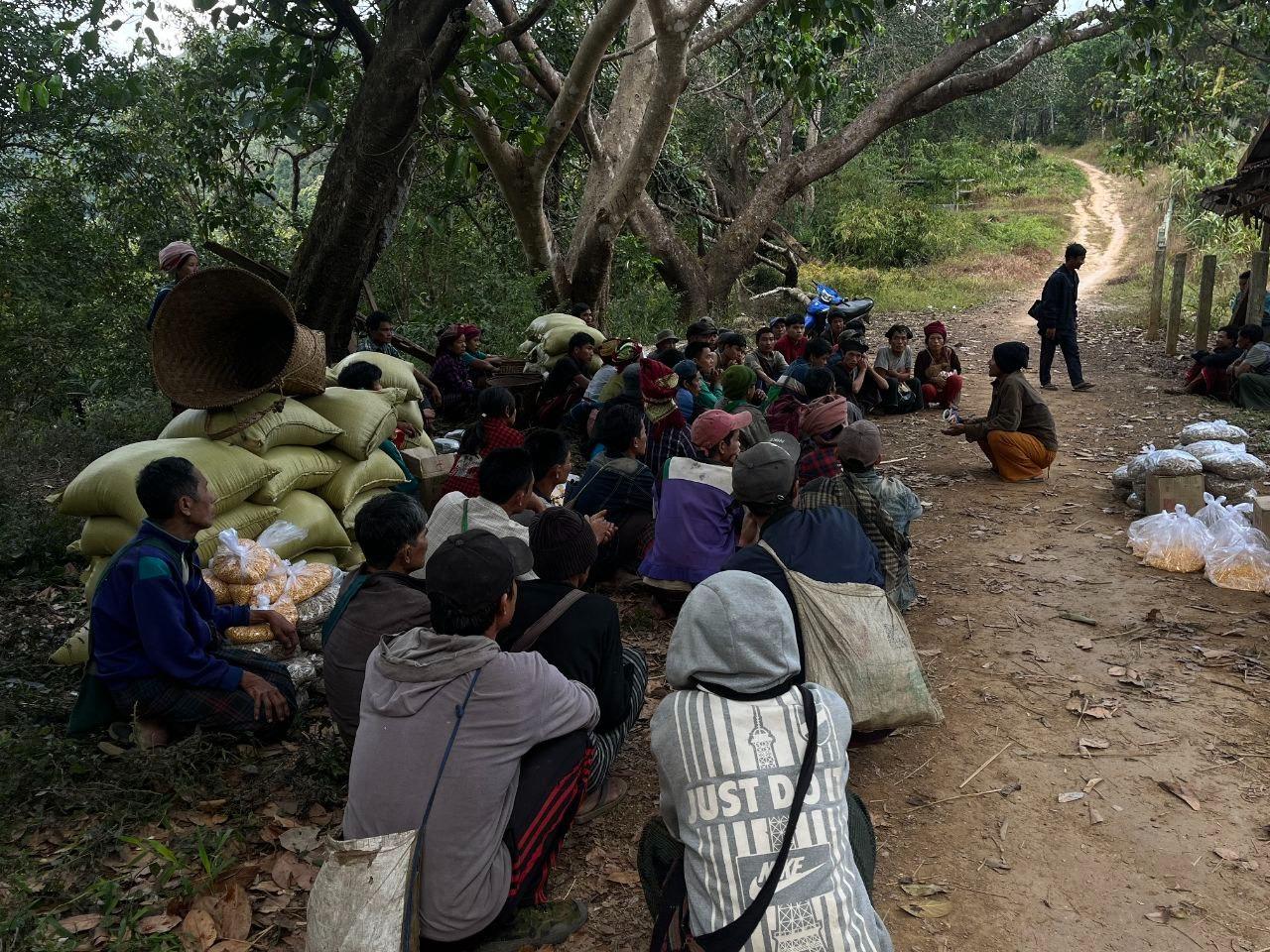
Beyond emergency distribution efforts, the field team also strengthened community-led response mechanisms through coordination meetings across six zones in December 2025. These meetings brought together 203 community members including 110 men and 93 women from 22 villages to share local knowledge, identify urgent concerns, and collectively plan safer and more effective humanitarian responses.
Despite significant logistical and security-related challenges, the commitment of field volunteers and local communities demonstrated the importance of community-driven humanitarian action during times of crisis. Their collective efforts strengthened local resilience, improved coordination, and ensured that humanitarian support continued reaching those most affected by conflict and displacement.